Meeting of April 28, 2026

The April 28th meeting at Jack’s restaurant has been replaced by the following event at the Saratoga Senior Center.

High School Essay Contest

Objective: Encourage current high school students to develop an interest in the American Civil War and explore its lasting lessons that continue to shape America today.

Prizes: Monetary awards will be given to the winners.

High School Essay Contest Event

Date: Tuesday, April 28, 2026
Location: Saratoga Senior Center
Address: 9655 Allendale Ave, Saratoga, CA

Event Schedule

  • 6:30 pm – 6:45 pm — Setup & Logistics
  • 6:45 pm – 7:00 pm — Gathering & Refreshments
  • 7:00 pm – 7:15 pm — SBCWRT Welcome and Brief Overview of the Organization
  • 7:15 pm – 8:00 pm — Essay Contest Presentations, Winner Selection, Quiz, Social Gathering, and Adjournment

Quiz for April 28, 2026

High School Essay Civil War Quiz: What Do You Know About The American Civil War?

Q#1 – What is the traditional definition of a “civil war”?

Q#2 – By May 1861, 11 states had seceded from the United States; name them.

Q#3 – What was the name of the major battle that began the Civil War?

Q#4 – Who was the President of the Confederate States of America?

Q#5 – Richmond, Virginia, was the second capital of the Confederacy; what was the name of the first city to serve as the capital?

Q#6 – What was the core cause leading up to the Civil War?

Q#7 – Of the now estimated 700,000 deaths in the Civil War; what was the major cause of these deaths?

Q#8 – What was the Emancipation Proclamation?

Q#9 – What is the name of President Abraham Lincoln’s most famous speech?

Q#10 – Were any Civil War battles fought in the State of California?

Q#11 – Which battle produced the most casualties (over 53,000) in the Civil War?

Q#12 – What was the name of the town where Robert E. Lee surrendered his army to Ulysses S. Grant on April 9, 1865?

Q#13 – What is the name of the person who assassinated President Abraham Lincoln?

Q#14 – What is the name of the Vice President who became President after Abraham Lincoln was assassinated?

Q#15 – What is the number of the Amendment in the US Constitution that abolished slavery?

Meeting of July 28, 2026

Join us at 6:30 PM, July 26, at Jack’s Restaurant & Bar, located at the Northwest corner of the Westgate Shopping Mall in San Jose, near Campbell (1502 Saratoga Ave, San Jose, CA 95129) and via ZOOM. This month’s topic is

Tonya McQuade on “Mary Brown, the Wife of John Brown”

What is a wife to do after her husband is hanged for treason?

Much has been written about the abolitionist John Brown—his role in the “Bleeding Kansas” border wars and his ill-fated raid on Harpers Ferry. His prophetic dying words foretold the bloodshed of the Civil War, and his hanging outside Charles Town, Virginia, followed by his burial in North Elba, New York, made national headlines and drew large crowds.

Far less attention has been given to John Brown’s wife, Mary, and how she and their surviving children rebuilt their lives in the years after his death. How many people know, for example, that Mary and several of her children moved to California in 1864 and eventually settled in Saratoga, on the western edge of Santa Clara County?

It was in Saratoga that Mary Brown spent the final years of her life. She now rests with sixteen other family members at Madronia Cemetery—thousands of miles from where her husband’s body “lies a-mouldering” in North Elba, New York.

Join us to learn more about Mary Brown’s later life, her California connections, and her family’s West Coast legacy.

Tonya McQuade is an author, educator, speaker, and retired high school English teacher. She is a passionate lover of history, travel, and nature. She and her husband frequently visit museums, state and national parks, and historical sites, and she enjoys reading historical texts and primary source documents.

Often, her reading of historical fiction sparks a deeper dive into the real people and events behind the stories, leading her to new discoveries and areas of interest.

After acquiring 50 family Civil War letters, Tonya began intensive research into the American Civil War in Missouri. She blogs about her writing journey and has written multiple articles for the Emerging Civil War website, including two that focus on Mary Brown and her family’s move to California.

Her book, A State Divided: The Civil War Letters of James Calaway Hale and Benjamin Petree of Andrew County, Missouri (2024), weaves together those family letters with historical commentary. It also explores John Brown’s role in the “Bleeding Kansas” border wars and his prophetic words about the coming Civil War before his execution for treason following the raid on the federal arsenal at Harpers Ferry.

Tonya is a member of the South Bay Civil War Round Table, South Bay Writers, Poetry Center San Jose, and the National League of American Pen Women. She earned B.A. degrees in English and Communication Studies, along with her Single Subject Teaching Credential in English, from the University of California, Santa Barbara. She later received her M.A. in Educational Leadership from San Jose State University.

You can learn more about Tonya on her website: tonyagrahammcquade.com, including a full listing of her Emerging Civil War articles.

Quiz for March 31, 2026

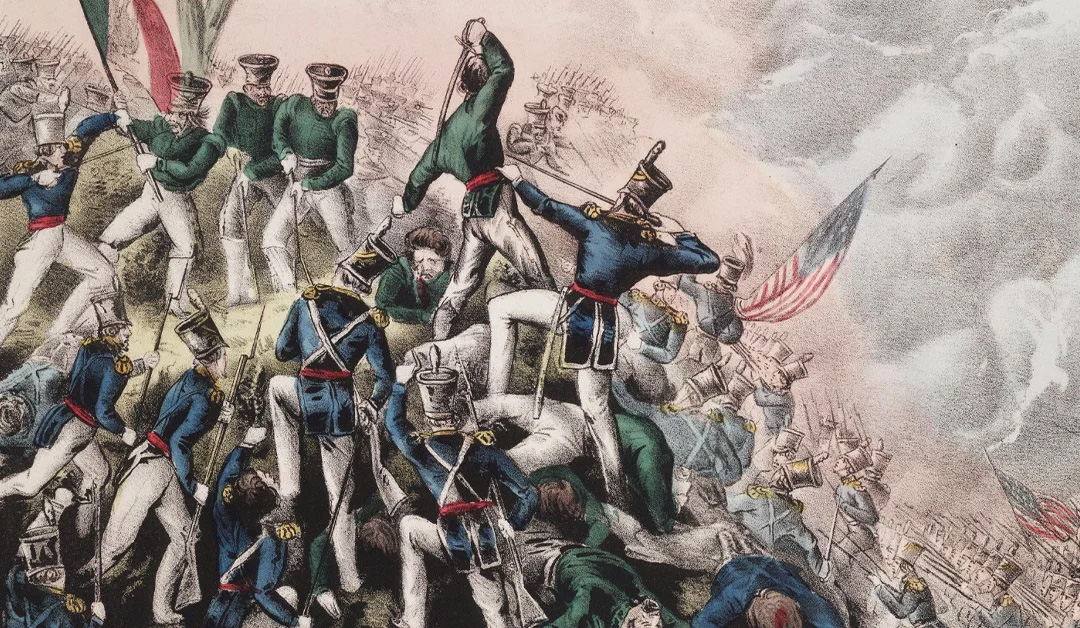
Civil War Quiz: What Do You Know About George Pickett?

Q#1 – Where was George Pickett raised?

Q#2 – What future Confederate general who served in the Army of Northern Virginia was Pickett’s cousin?

Q#3 – What is the legend surrounding Pickett’s appointment to West Point when Pickett at the time was studying law in Illinois?

Q#4 – Where did Pickett rank in the 1846 West Point graduating class of cadets?

Q#5 – What action during the Mexican–American War gained Pickett national recognition?

Q#6 – In 1853 in Texas, what incident occurred involving Pickett and Winfield Scott Hancock?

Q#7 – What was the cause of death of Pickett’s first wife, Sally Harrison Minge, in 1851?

Q#8 – In 1856, Pickett served in the Washington Territory where he commanded the construction of Fort Bellingham, and where he also built a frame house. What is unique about this house?

Q#9 – What is unique about Pickett’s second marriage while stationed in the Washington Territory ?

Q#10 – During the Civil War, what was the name of the horse that Pickett rode?

Q#11 – What was the non-military issue that caused a strained relationship between Pickett and his I Corp Commander, General James Longstreet?

Q#12 – On July 3, 1863, at the Battle of Gettysburg, following a two-hour artillery barrage prior to charging the Union lines on Cemetery Ridge, what is Pickett quoted as saying to inspire his men?

Q#13 – After the Battle of Gettysburg, what assignment was Pickett given?

Q#14 – After the Civil War, what incident caused Pickett, along with his wife and son, to flee to Canada?

Q#15 – Decades after Pickett’s death, Pickett’s widow, Sallie, authored three books on her husband. Name one of the three?

Meeting of February 24, 2026

Kirstein Ta on “Ars Moriendi – The Good Death”

Dying far from home and loved ones was a harsh reality that soldiers had to face. Many turned to comrades, religious leaders, nurses, or doctors to help them facilitate “a good death”—a death reflective of character and legacy, based on faith, repentance, and acceptance of God’s will.

“Civil War soldiers were, in fact, better prepared to die than to kill, for they lived in a culture that offered many lessons in how life should end. But these lessons had to be adapted to the dramatically changed circumstances of the war. Soldiers and their families struggled in a variety of ways to mitigate the cruel realities and to construct a good death amid chaos.” —Drew Gilpin Faust

Kirstein Hansen-Ta is a new student of the Civil War. In July 2024, she inherited ten six-inch binders containing her family history, dating as far back as 1630 to the present day. As incredible as all this history is, she found none as fascinating as her family’s experiences during the Civil War. Several men on both sides of her family fought for the Confederacy, including her second great-grandfather and a number of uncles. She is happy to report that, with the exception of one, they all returned home.

Among the hundreds of pages in these binders, Kirstein came across what she considers the most valuable: four typewritten pages of a letter from an uncle describing all three of his older brothers and their time in the Confederate army. Additionally, he describes what life was like for the family during the Civil War. After reading these stories, Kirstein realized that the most intriguing part of the Civil War wasn’t necessarily the battles or the politics, but rather the people who lived through it.

Wanting to learn more about the Civil War, Kirstein discovered the website for the South Bay Civil War Round Table and officially became a member in October 2024. She looks forward to learning more about this significant time in our country’s history.

Quiz for February 24, 2026

Civil War Quiz: What Do You Know About the Black Codes and Jim Crow?

Black Codes

Q#1 – By what other name were the ‘Black Codes’ referred to?

Q#2 – With their initial inception, what category of people did the Black Codes apply to?

Q#3 – Who actually coined the term ‘Black Codes’?

Q#4 – What were the two main objectives of the Black Codes?

Q#5 – What was the single defining feature of the Black Codes?

Q#6 – What was the key requirement before a Black person could be hired for a job?

Q#7 – What was the punishment if a Negro decided to quit their job working for a white person?

Q#8 – What was the punishment interracial marriage?

Jim Crow Laws

Q#9 – What was the main objective of Jim Crow laws?

Q#10 – What is a Poll Tax?

Q#11 – What were Literacy Tests?

Q#12 – What were Grandfather Clauses?

Q#13 – What Jim Crow law was associated with Amateur Baseball?

Q#14 – Why is the 1896 Supreme Court Case of Plessy v. Ferguson associated with Jim Crow Laws?

Q#15 – What three major actions were key to the removal of Jim Crow laws?

Meeting of January 27, 2026

Alan Sissenwein on “The Checkered Civil War Career of Edwin Vose Sumner”

History has not always been kind to Maj. Gen. Edwin Vose Sumner, the Civil War’s oldest corps commander. Born in Massachusetts in 1797, he had over four decades of military service behind him—with much combat experience—when the South seceded. In 1862, he was assigned to command the 2nd Corps in the Army of the Potomac, a position that some historians believe was beyond his capacity. Later that year, at the start of the Fredericksburg campaign, he took charge of the Right Grand Division, consisting of the 2nd and 9th Corps along with two cavalry brigades.

Sumner’s critics cite his performance at the Battle of Antietam as proof of his ineptitude. There, he led one of his divisions into the West Woods, where a Confederate counterattack inflicted over 900 casualties and sent the Federals reeling. Sumner’s culpability in this fiasco remains a source of debate, but the incident was unquestionably the worst moment of his military career.

Whatever Sumner’s limitations, his Civil War record also included successes. The general can be credited with averting disaster on at least two occasions. At the Battle of Fair Oaks, Sumner was ordered to cross the flooding Chickahominy River and support the isolated 3rd Corps, which was being hard-pressed by a Confederate attack. Ignoring warnings that the river had become impassable, Sumner and the 2nd Corps crossed the waterway over a pair of rickety bridges, one of which was soon destroyed by the surging current while the other was in danger of being swept away. Remarkably, they managed to reach the fighting in time to save the 3rd Corps from destruction. Six months later, at the Battle of Fredericksburg, Sumner staved off a potentially larger catastrophe when he dissuaded Ambrose Burnside from renewing his assaults against Marye’s Heights. This talk will examine Sumner’s personality and generalship, showing how they influenced the war for both good and ill.

Alan Sissenwein has been a member of the South Bay Civil War Round Table since 1997 and currently serves as its vice president. A professional writer, he holds a bachelor’s degree in history from UC Berkeley and a master’s in journalism from the Medill School of Journalism at Northwestern University. He is currently writing the second draft of a book on the Battle of Fredericksburg.

Quiz for January 27, 2026

Civil War Quiz: What Do You Know About the Anaconda Plan?

Q#1 — What were the main objectives of the Anaconda Plan?

Q#2 — Who proposed the Anaconda Plan?

Q#3 — How did the Anaconda Plan get its name?

Q#4 — What were the names of the two main operational components of the Anaconda Plan?

Q#5 — What reaction did the Anaconda Plan receive from a majority of the Union military high command?

Q#6 — What Executive Order by President Lincoln actually superseded the Anaconda Plan?

Q#7 — When was the Anaconda Plan approved and then implemented?

Q#8 — Who was initially given overall authority to implement the Anaconda Plan?

Q#9 — Which Assistant Secretary was key in advancing the western portion of the Anaconda Plan?

Q#10 — Approximately how many miles of Confederate coastline were included in the Anaconda Plan?

Q#11 — What was a major supply factor facing the Atlantic Blockade portion of the Anaconda Plan?

Q#12 — What was the solution to the supply problem for the Atlantic Blockade?

Q#13 — To implement the Gulf of Mexico Blockade component of the Anaconda Plan, what geographic location was critical to place under Union control?

Q#14 — By the end of the Civil War, approximately how many Union naval ships were involved in the Anaconda Plan?

Q#15 — How successful was the blockade at preventing ships sympathetic to the Confederacy from getting through?

Meeting of November 25, 2025

David Hsueh on “Requiem for Innocence: Destruction of Nature and Animals in the Civil War”

Is This Death? by Alexander Gardner, Antietam Battlefield

Five days after the bloodiest single day in American history at Antietam, Union XII Corps acting commander Brig. Gen. Alpheus Williams rode across the devastated battlefield. The ground was still littered with corpses, and the stench of decay hung in the air. That evening, in a letter home to his daughter, Williams struggled to describe the scenes he had witnessed. One image, however, refused to leave him:

“The number of dead horses was high. They lay, like the men, in all attitudes. One beautiful milk-white animal had died in so graceful a position that I wished for its photograph. Its legs were doubled under, and its arched neck gracefully turned to one side, as if looking back to the ball hole in its side. Until you got to it, it was hard to believe the horse was dead.”

Unbeknownst to Williams, three days earlier, on September 19, the photographer Alexander Gardner had encountered the very same animal. He captured it in a haunting image later published in his Photographic Sketch Book of the War, titled “Confederate Colonel and Horse, Both Killed at the Battle of Antietam.” Williams’ words and Gardner’s lens together preserved the same tragic scene: an animal of striking beauty transformed into a casualty of war. Once overlooked, the photograph has, in recent decades, gained recognition as a powerful emblem of Antietam and of the Civil War itself, embodying not only the vast human slaughter but also the silent suffering of the animals drawn into the conflict.

This talk explores the wider devastation of the natural world during the Civil War: the destruction of landscapes, the slaughter of horses on the battlefield, and the displacement of other wildlife. It portrays the conflict not only as a human tragedy but also as an ecological catastrophe—a wound inflicted upon both creation and the divine. Its aim is to illuminate a different dimension of wartime destruction: the suffering borne by those who could not speak for themselves.

David Hsueh is a fourth-year political science student at the University of California, Berkeley. An avid history enthusiast since kindergarten, his first introduction to the American Civil War came through reading about President Lincoln. His true passion for the war began after his first viewing of the movie Gettysburg and his subsequent visits to the Gettysburg and Antietam battlefields seven years ago, at age 11. His main interests in the Civil War center on leadership decisions at the brigade-to-army level and on human-interest stories—both of generals and of the common soldier. A cinephile and film lover, he drew inspiration for the themes and topic of this talk from Andrei Tarkovsky’s Andrei Rublev and Robert Bresson’s Au Hasard Balthazar.